
Phimosis
Understanding and treating foreskin tightness
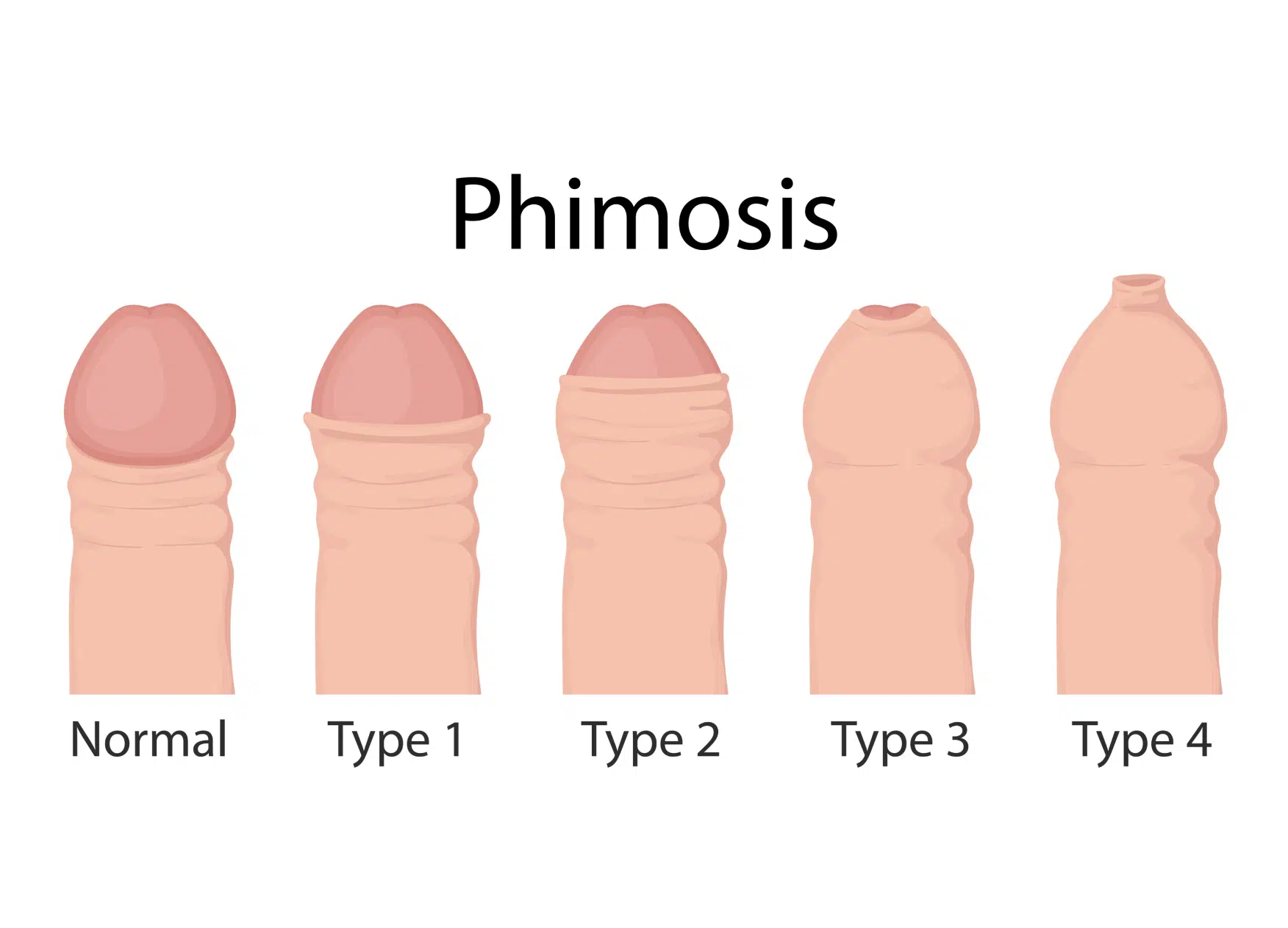
Phimosis is a common condition that prevents the glans from being fully retracted due to a tightness of the foreskin. It can be congenital (present from birth) or acquired as a result of infections, inflammation, or trauma.
Introduction
Severe phimosis can lead to pain, infections, and urinary or sexual complications. The good news is that solutions exist. Appropriate treatment can restore comfort and well-being to daily life.
What is phimosis?
Phimosis is a narrowing of the foreskin that prevents or makes it difficult to retract the foreskin. It is normal in young children but should gradually disappear during adolescence. In adults, it can be bothersome or even pathological. Some statistics:
- Approximately 10% of 3-year-old children still have phimosis.
- It persists in 1% of adolescents and adults and can cause discomfort.
- Aggravating factors: infections, inflammation, trauma, painful sexual intercourse.
Sébastien Beley - Patient journey in practice
What are the symptoms?
Phimosis can be asymptomatic, but when it becomes problematic, several signs may appear:
- Difficulty or impossibility of retracting the foreskin of the glans
- Pain during erections or sexual intercourse
- Frequent infections (balanitis, urinary tract infections)
- Redness, swelling and inflammation of the foreskin
- Urinary discomfort in cases of significant narrowing
It can develop gradually. Prompt treatment helps prevent complications.
What are the causes of phimosis?
Phimosis can be of congenital origin (present since childhood).
- Foreskin naturally tight from birth
- This can persist if retraction of the foreskin has never been possible.
Acquired (development in adulthood)
- Chronic infections and inflammations (balanitis, posthitis)
- Repeated microtrauma (forced retraction of the foreskin, excessive friction)
- Excessive scarring due to inflammation or trauma
Expertise
Dr. Sébastien Beley: How to treat phimosis without surgery?
Impact on daily and intimate life
It can lead to various complications, impacting comfort, health, and sexual life:
- Pain during sexual intercourse (dyspareunia)
- Difficulty or impossibility of maintaining proper personal hygiene
- Increase in urinary and genital infections
- Aesthetic discomfort and loss of self-confidence
It is essential to consult a specialist to avoid further deterioration and to regain a life free from pain and discomfort.
What solutions exist?
Drug treatments (mild to moderate cases)
- Corticosteroid-based creams (betamethasone): soften the foreskin and facilitate its widening.
- Local antiseptics in case of associated inflammation.
- Antibiotics if an infection is present.
Creams are often effective in children and adolescents, but less so in adults. Surgical treatments (severe or persistent cases): If medication is insufficient, surgery may be recommended.
- Posthectomy (partial or total circumcision ): removes all or part of the foreskin.
- Preputial plasty: widens the opening to allow retraction without completely removing the foreskin.
Surgery is a definitive and effective solution, suitable for cases resistant to local treatments.
Experience
Phimosis #phimosis #urology #doctor
Why consult a specialist?
A consultation allows you to:
- To assess the severity of phimosis and its consequences
- To consider appropriate treatment (creams, exercises or surgery)
- To avoid complications and regain comfort and well-being
Don’t let it ruin your daily life. The earlier it’s addressed, the simpler the treatment.
Patient Journey
Let me introduce you to the typical patient journey, my approach to urology, and how I work.
Are you suffering from phimosis?
Don’t let this problem affect your comfort and your intimate life.
- Urology Clinic Paris Opéra – Paris 17th
- In-person or teleconsultation
- Book your appointment today
FAQ – Frequently Asked Questions
Can phimosis be treated without surgery?
Yes, in moderate cases. Topical treatment with a corticosteroid cream, combined with gentle foreskin stretching exercises, can avoid surgery in some cases. If this fails, if the phimosis is severe, or if it recurs, surgery is recommended.
Is circumcision the only surgical solution?
No. Depending on the severity of the phimosis and your preference, a preputial plasty (which preserves the foreskin) can be performed. Circumcision, partial or total, remains the most lasting solution for severe or recurring phimosis.
What are the next steps after the operation?
The procedure is performed on an outpatient basis. Pain is moderate and well controlled with simple analgesics. Healing takes 2 to 4 weeks, and sexual intercourse can generally be resumed after 4 to 6 weeks.
What are the risks of not treating phimosis?
Untreated phimosis can lead to foreskin tears, recurrent local infections (balanitis), pain during intercourse, and, more rarely, paraphimosis, which is a medical emergency. In adults, any persistent phimosis warrants a consultation.
Dr Sébastien Beley's expertise
Chirurgien Urologue - Andrologue

Phimosis: there are solutions.