
Surgical correction of Peyronie’s disease
Regaining a functional penis and a fulfilling sex life
Peyronie’s disease correction surgery is an effective solution for correcting severe penile curvature when discomfort is significant or when medical and non-invasive treatments are no longer sufficient.
Advantages: Why consider surgery to correct the curvature?
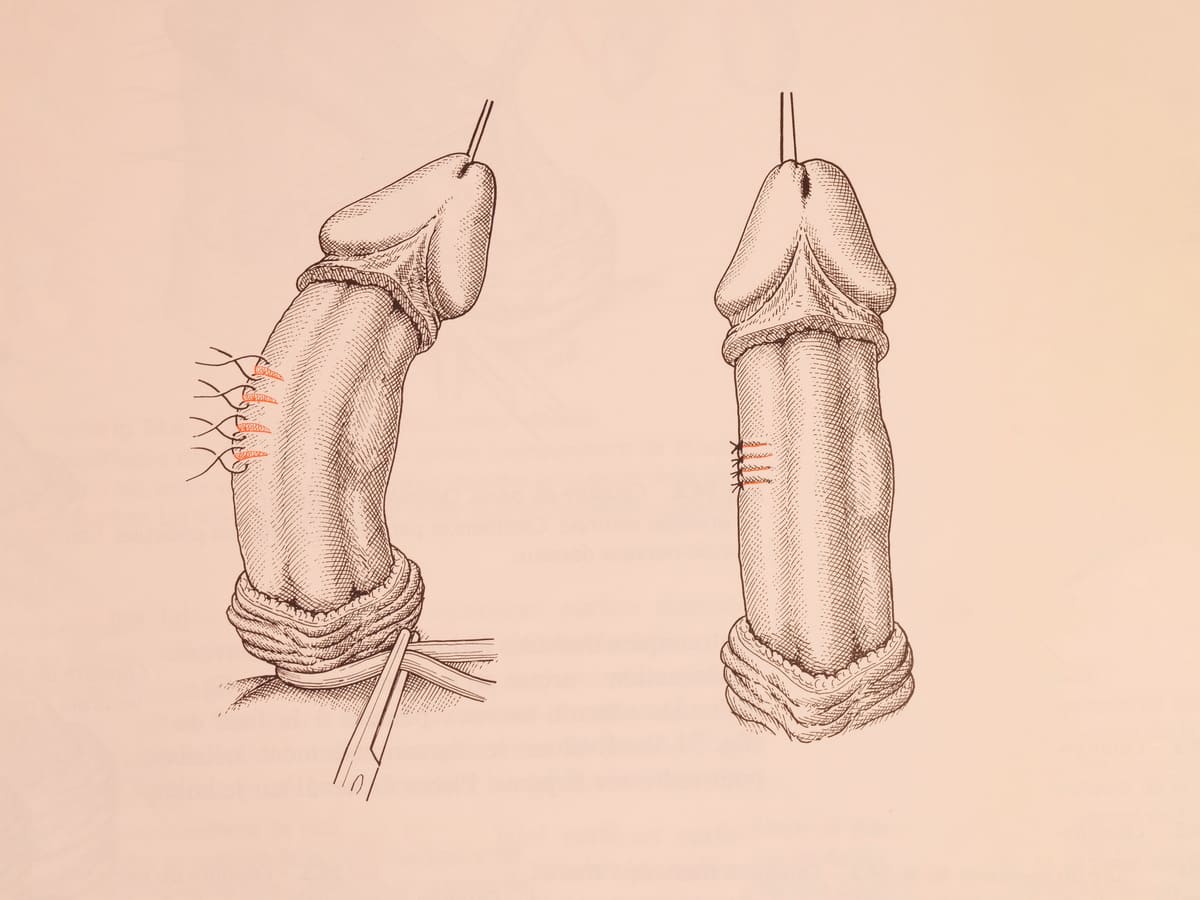
Operating procedures
The surgical technique is tailored to each patient based on the severity of the curvature , the presence or absence of significant fibrosis, and functional expectations. Plication surgery (Nesbit, Yachia, modified techniques)
- Suitable for curves less than 60°
- Plication of the corpora cavernosa on the side opposite the plate
- Rapid intervention with reliable results
Risk: slight shortening of the penis. Surgery with grafting (plaque excision/incision + graft)
- Indicated for severe (> 60°) or complex curvatures (hourglass deformities, torsions)
- Incision or partial removal of the fibrous plaque
- Placement of a graft (biological or synthetic material) to restore symmetry
Objective: to correct without shortening, but with a higher risk of erectile dysfunction. Penile implant placement (severe cases with associated erectile dysfunction).
- A definitive solution to treat both curvature and erectile dysfunction
- Prosthetic cylinders mechanically correct the deformity
Indicated when Peyronie’s disease is associated with irreversible impotence.
Expertise
The assessment of Peyronie's disease
 Le bilan de la maladie de LapeyronieDr Sebastien Beley
Why resort to surgery?

Dr. Sébastien Beley's expertise
For almost 20 years, I have been supporting my patients with Peyronie’s disease in their care, always prioritizing a personalized approach adapted to their situation.
- Complete assessment and precise diagnosis with penile ultrasound
- Choosing the surgical technique best suited to your case
- Using modern techniques to limit risks and optimize results
Experience
How to treat Peyronie's disease? #urology #erectiledysfunction #lapeyronie #health
 Comment traiter la maladie de Lapeyronie ? #urology #erectiledysfunction #lapeyronie #healthDr Sebastien Beley
My review in video
I made this video to explain Peyronie’s disease in detail.
FAQ – Frequently Asked Questions
When should corrective surgery be considered?
Surgery is offered when the disease has been stable for at least 6 months and the curvature interferes with or prevents sexual intercourse. It is never performed during an active phase of the disease.
What surgical techniques are used?
Two main approaches exist: plication (Nesbit technique or derivatives), which shortens the convex side, and plaque incision with grafting, reserved for severe curvatures. The choice depends on the degree of curvature and the quality of erections.
Will I lose length after the operation?
The plication results in a moderate loss of length, generally 1 to 2 cm, on the longer side. Techniques involving grafting better preserve length but carry a higher risk of erectile dysfunction. This point is discussed during the consultation.
Can the curvature recur after surgery?
The risk of recurrence is low when the procedure is performed on a truly stable condition. A slight residual curvature without functional impairment is possible and does not prevent satisfactory sexual relations.
Dr Sébastien Beley's expertise
Chirurgien Urologue - Andrologue

Surgical correction of Peyronie’s disease: there are solutions.