
Introduction
The question of penis enlargement during erection comes up regularly in consultations. It deserves a clear answer, based on current medical data and not on commercial promises.
The reality is more nuanced: some interventions exist, but they expose patients to significant surgical risks for often limited results. Other, less invasive approaches offer a better balance between safety and efficacy.
This is precisely what this article aims to examine, with the rigor that this subject demands.
Penis lengthening surgery by sectioning the suspensory ligament is a real, documented technique that I perform. However, it has a fundamental limitation: it only lengthens the penis when flaccid, not when erect .
In this article, I explain everything about this procedure: its anatomical function, how it takes place, what it really brings, its limits, its risks, and in which cases I recommend it — or do not recommend it.
The suspensory ligament of the penis: understanding the anatomy

What is the suspensory ligament?
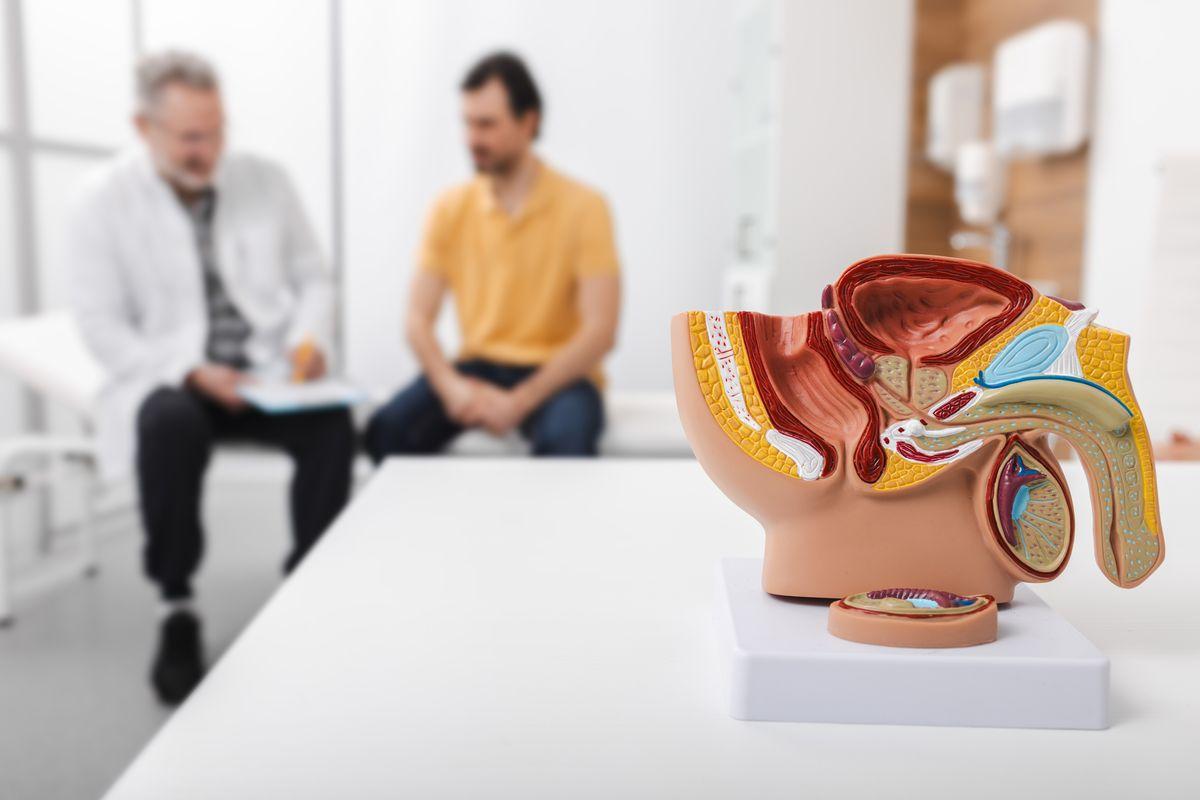
The suspensory ligament is a structure that connects the penis to the pubic bone and maintains its angle. It is also what holds the buried portion of the penis under the pubic skin — a part of the organ invisible from the outside, but anatomically very real.
It is precisely on this structure that lengthening surgery acts: by cutting this ligament, this buried portion is released outwards, resulting in a visible gain at rest.
Why does cutting this ligament lengthen the penis?
When the suspensory ligament is severed, the buried portion of the penis is released. It can then descend and become visible. The penis is not lengthened; it is simply exposed.
This is why the gain is mainly observed in the flaccid position. In erection, the corpora cavernosa stiffen and occupy their full available length — the fact that the ligament is cut does not change their actual anatomical length.
A useful metaphor: imagine a rope holding a coiled spring. By cutting the rope, the spring extends further at rest. But its maximum length—under full tension—remains the same.
According to data available in the literature, particularly in The Journal of Urology and the journals of the French Society of Urology , the average gain is +2 to +6 cm at rest . During erection, the gain is minimal and unpredictable.
Is it possible to lengthen an erect penis surgically?
This is the real question most patients ask me. And it deserves a two-part answer — because there are actually two distinct answers.
Answer 1: Yes — but at the cost of unacceptable risks
There is a surgical procedure that involves grafting prosthetic material onto the corpora cavernosa to lengthen them. During this operation, the glans and urethra are separated from the corpora cavernosa—which is extremely invasive.
This surgery is almost never performed for cosmetic reasons in a healthy man. It is reserved for very specific medical situations: confirmed micropenis, severe retraction following infection, or penile implant . I do not perform it outside of these indications.
The risks are disproportionate to the benefits for a man with an anatomically normal penis: loss of sensitivity, permanent erectile dysfunction, and serious infectious complications. It’s not an option I can recommend.
Answer 2: No — if we want a safe and reliable procedure
If we are looking for an intervention with reasonable risk, which does not affect erectile function and gives predictable results, then the answer is clear: no surgical technique can significantly lengthen the penis when erect without major risk .
Sectioning the suspensory ligament is the only lengthening procedure I perform—and only for patients for whom it is clearly indicated. It affects the flaccid length. That’s all. And that’s already a lot for certain types of patients.
My opinion has remained the same for 20 years of practice: do not take disproportionate surgical risks to try to lengthen your erect penis . The results will be disappointing—and the complications will not.
How is penile lengthening surgery performed?

Before the procedure: the consultation
It all begins with a thorough consultation at my office. This isn’t a formality—it’s the most important part of the process. I assess your anatomy, understand your expectations, and explain precisely what the procedure can and cannot do in your specific case.
I also verify that you meet the necessary criteria: a functional erection (or treated dysfunction), realistic motivation, and the absence of medical contraindications. If I think you would be disappointed with the outcome, I will tell you.
A standard pre-operative blood test is performed. The anesthesiologist will see you in a separate consultation before the procedure.
The day of the procedure: the steps
The operation is performed under general or regional anesthesia, in an approved surgical facility.
- A discreet incision in the pubic hair — the scar will be virtually invisible once the hair grows back
- Controlled section of the suspensory ligament — a precise procedure, limited to the targeted area
- Careful closure using intradermal sutures or absorbable threads
- Dressing and monitoring in the recovery room
Procedure duration: 60 to 90 minutes
Type of anesthesia: General or regional
Hospitalization: 1 night depending on the clinical case
Structure: Accredited surgical clinic
Can other gestures be combined at the same time?
Yes, and that’s often relevant. Sectioning the ligament only affects the length. If you also wish to increase the volume, I can combine this with penile lipofilling during the same surgical procedure—to address both length and girth in a single operation.
Other complementary procedures can be discussed depending on your situation: frenulum plasty, circumcision, post-operative glans augmentation with hyaluronic acid.
Recovery: what you need to prepare for
The recovery schedule
- Day 0 to Day 2 : mild to moderate pain, simple analgesics, strict rest at home. Dressing to be kept dry.
- Days 3 to 7 : Gradual decrease in discomfort. Restored mobility for light daily activities.
- Days 7 to 10 : Removal of stitches if non-absorbable. Follow-up examination at my office.
- 3 weeks : Resumption of sedentary professional activities. Avoid intense physical exertion.
- 6 weeks : resumption of sexual relations possible, depending on clinical progress.
- 3 months : final result visible. Follow-up consultation for final evaluation.
The penis extender: a step that many neglect
This is a point I consistently emphasize: wearing a penile extender is essential to maintain the result . And yet, it’s often the step that patients abandon too soon.
Why this is essential: once the ligament is severed, the scar tissue naturally tends to retract in the following weeks. If nothing maintains the tension, the gains made can be partially lost.
The stretcher creates a gentle, gradual traction on the tissues, which helps maintain them in a supine position during the healing phase. I generally recommend wearing it daily for 4 to 6 hours for 8 to 12 weeks post-surgery.
In my experience, patients who strictly follow the extender protocol achieve significantly better—and more lasting—results. It’s not optional; it’s an integral part of the treatment .
Practical guidelines to remember
- Showers are allowed from day 2 , baths are not recommended for 3 weeks.
- Shapewear is recommended for the first 2 weeks
- No sports, swimming or cycling for a minimum of 4 weeks
- Avoid sun exposure of the scar for 6 months (risk of pigmentation).
- Follow-up consultations at day 7 , 1 month and 3 months post-surgery
Risks and contraindications: everything you need to know
I would never perform a procedure while minimizing its risks. Here are the actual facts, as I communicate them to each patient during the informed consent process.
Risk table
| Risk / Complication | Estimated Frequency | What I do to prevent it |
|---|---|---|
| Change in the angle of erection: | Frequent (variable). | Information provided routinely during consultation. |
| Visible or hypertrophic scarring: | Rare if precise technique is used. | Incision in the pubic hair. |
| Instability at the base during erection: | Infrequent. Strict | post-operative protocol. |
| Partial loss of gain (retraction) | possible without follow-up. | Wearing an extender is recommended. |
| Post-operative hematoma | (rare): | Compression dressing, rest ( days 0-3) |
| Infection: | Very rare. | Approved facility, antibiotic prophylaxis. |
| Dissatisfaction with the result. | Variable. | Calibration of upstream expectations. |
The risk that patients most often underestimate
Main risk: change in the angle of erection . By cutting the ligament that anchored the penis to the pubis, the point of attachment is mechanically altered — and therefore the direction of the erection, which may be oriented slightly downwards.
For some patients, this change is unsettling, even a source of regret. That’s why I always discuss it during consultations, and I make sure you fully understand this information before we jointly confirm the surgical decision.
Contraindications to surgery
- Untreated erectile dysfunction — the erection must be functional or the dysfunction stabilized before any surgery
- Uncontrolled clotting disorder
- Active infection of the urogenital system
- Unrealistic expectations — if the patient expects a significant improvement in erections, surgery is not indicated
- Very high BMI — can complicate the surgical procedure and healing
The use of certain medications (anticoagulants, aspirin, anti-inflammatories) must be stopped before the procedure. A complete pre-operative assessment is systematically carried out to rule out any risks.
In which cases do I recommend — or advise against — this surgery
This is the most important section of this article. Because whether this procedure is right for you doesn’t depend on your desire — but on your clinical profile and the reality of your expectations .
I recommend sectioning the ligament if...
- You have a penis whose flaccid length really bothers you on a daily basis (changing rooms, intimacy, self-confidence)
- You have a functional erection and are satisfied with the length of your erection.
- You understand and accept that the gain will be seen primarily at rest
- Your motivation is stable and realistic, as documented during the consultation
- You are ready to follow the complete post-operative protocol, including the extender.
I advise against it if...
- You’re hoping for a significant improvement in erections — that won’t happen
- Your insecurity is solely related to erect size — hyaluronic acid or lipofilling would be more suitable
- You have untreated erectile dysfunction
- You are not ready to accept a possible change in the angle of erection.
- You’re looking for a quick solution without post-operative follow-up — that’s not possible with this surgery.
After 20 years of practice, my observation is clear: the most satisfied patients are not those who gained the most centimeters . They are those for whom the indication was appropriate, the expectations were realistic, and the follow-up was respected.
Lengthening or volume? Compare the options before deciding
Ligament sectioning is just one of three techniques I offer. Here’s an objective comparison to help you understand which one is right for you—and we’ll discuss it together during the consultation.
| Criterion: | Ligament section (lengthening), | Hyaluronic acid (volume), | Lipofilling (lasting volume) |
|---|---|---|---|
| Objective: | Flaccid length, | Circumference, | Circumference |
| Average gain | : +2 to +6 cm at rest (minimal when erect). | Immediate volume loss ( -30% at stabilization). | Volume remains stable if weight is constant. |
| General/regional | anesthesia | Local | cream |
| Duration: | 60–90 min, | 20–45 min, | 60–90 min |
| One-night | hospitalization | depending on the case. None (office). | Outpatient / 24h |
| Recovery | 2–3 weeks | 24–48h | 2–3 weeks |
| Ultimate | durability | :12–18 months. | Stable if weight remains constant. |
| Reversible? | No | Yes (hyaluronidase) | No |
| Main risks: | Angle of erection, scarring, | nodules, asymmetry, migration, | partial resorption |
* Indicative prices. A personalized quote will be provided during the consultation.
In many cases, the most relevant approach is not lengthening surgery alone — it is either volume (hyaluronic acid or lipofilling), or a combination of lengthening + volume for a consistent overall result.
The actual results: no more, no less
What you can actually expect
- +2 to +6 cm in flaccid length — visible from the first weeks, definitive at 3 months
- A discreet scar within the pubic hair, barely visible from a distance.
- Improved psychological comfort for well-selected patients
- Final result — the ligament does not regenerate
What you cannot hope for
- A significant increase in length during erection
- The same result as for another patient — every anatomy is different
- A gain without post-operative follow-up (extensor required)
- An erection angle identical to the pre-operation angle in all cases
These data are consistent with the available medical literature. A review published in Translational Andrology and Urology highlights that postoperative satisfaction is directly correlated with the quality of the preoperative assessment and the accuracy of the information given to the patient.
FAQ: Your questions about lengthening surgery
Can penis enlargement surgery lengthen an erect penis?
No—not significantly and reliably. Sectioning the suspensory ligament lengthens the penis at rest, with a minimal and unpredictable gain when erect. The only surgery that affects erectile length is an extremely invasive procedure (grafting onto the corpora cavernosa), which I do not perform on healthy men except under strict medical indications. If your goal is to improve erections, hyaluronic acid or lipofilling—which increase volume—will be more suitable.
How many centimeters can be gained by sectioning the ligament?
The average gain observed is +2 to +6 cm in the flaccid position . This figure varies depending on your initial anatomy—particularly the size of the buried portion of the penis, which is assessed during the consultation. I cannot promise a precise result before examining you.
Is the result final?
Yes. Once the ligament is severed, it does not regenerate. The result is permanent — provided the post-operative protocol is followed, particularly wearing the extensor brace, which prevents scar contracture in the first few weeks.
Does it change erections?
Neither the quality nor the rigidity of the erection will be affected. However, the angle may be slightly altered—the penis may point a little more downward than before. This is information I always explain during consultations, and patients must accept it before the procedure.
How much does this operation cost?
The price of penile lengthening surgery generally ranges from €3,500 to €6,000 , depending on the complexity of the case and the surgical approach. If lipofilling is performed at the same time, the overall cost will be higher. A detailed and personalized quote will be provided during your consultation. This procedure is not covered by French national health insurance except in cases of specific medical indications (such as a confirmed micropenis).
Should we stop working?
For office work: allow approximately one week off work. For physical work: two to three weeks . Sexual relations are not recommended for six weeks . Strenuous exercise should be avoided for at least four weeks .
Can lengthening surgery be combined with lipofilling?
Yes, and that’s often the combination I recommend for patients wanting to address both length and volume. Both procedures can be performed during the same surgery, under the same anesthesia. This optimizes the result while minimizing the number of interventions.
Is a penile extender really mandatory after the operation?
I wouldn’t say “mandatory” in the legal sense—but highly recommended if you want to maintain your gains. Without mechanical traction in the following weeks, the scar tissue will naturally retract, and some of the gains may be lost. I consider the expander an integral part of the treatment protocol, not an optional accessory.
Key takeaways
Sectioning the suspensory ligament works but within a clear limit: lengthening the penis at rest .
It does not affect the length of an erection. It is not a universal solution. It is a specific indication, for carefully selected patients.
In many cases, other options (volume or combination) are more suitable.
The only way to know what is relevant for you: a personalized consultation .
So I invite you to come and see me. We’ll look together at what’s possible for you, without taboos or pressure. It’s the only way to get an honest answer—one tailored to your anatomy, not a generic case.
Make an appointment with Dr. Beley — Urology Practice Paris Opéra
Tel. +33 1 42 68 83 30 | Address: 82 Boulevard de Courcelles, Paris 17th arrondissement | Email: contact@beleyurologie.fr
Medical sources and references
Veale D. et al. (2015) — Am I normal? BJU International — reference study on penile measurements
https://bjui-journals.onlinelibrary.wiley.com/doi/10.1111/bju.13010
Translational Andrology and Urology — Systematic review of penile lengthening techniques and patient satisfaction
https://tau.amegroups.org/
The Journal of Urology (AUA) — Studies on suspensory ligament surgery
https://www.auajournals.org/
French Society of Urology (SFU) — Resources in andrology and penile surgery
https://www.urofrance.org/
French National Authority for Health (HAS) — Recommendations on cosmetic surgery and informed consent
https://www.has-sante.fr/